Keeping a Reading Notebook Without Turning It Into Homework
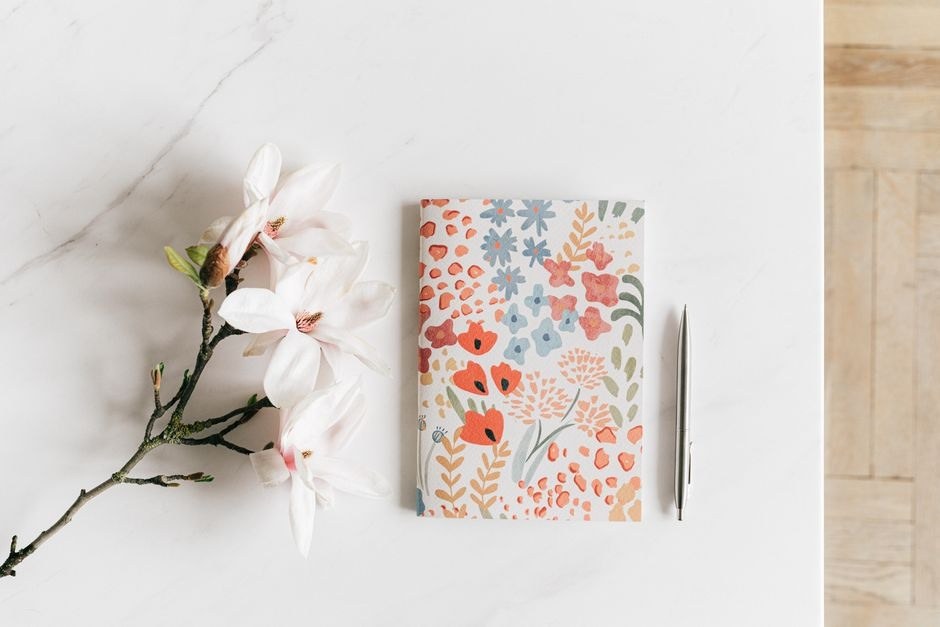
A reading notebook sounds wonderfully romantic until it starts to feel like an assignment. It is easy to imagine pages of elegant reflections and carefully copied quotations, then abandon the habit after three books because the notebook has become another task to complete. A more useful approach is much lighter: keep only what you genuinely want to remember.
The notebook does not need to prove that you understood a book. It only needs to catch the thoughts that might otherwise disappear a week later. A sentence, a question, a character detail, or even a note about where you were reading can be enough.
What belongs in the notebook?
Anything that makes you pause. Some entries may be only one line long. Others may become half a page because a chapter connects with something you have been thinking about elsewhere. Variety is a strength; it keeps the notebook attached to real reading rather than to a fixed method.
- A quotation you want to revisit, copied with its page number.
- A question the book raises but does not resolve for you.
- A quick description of a character, place, or idea that feels especially vivid.
- A comparison with another book, film, photograph, or memory.
- A short note on why you stopped reading a book, if you did.
The last point matters. A reading notebook should make room for unfinished books. Recording why something did not hold your attention can be as revealing as writing about a favorite novel.
The small details are often the useful ones
Plot summaries are easy to find later. Your own small reactions are not. You may forget the exact sequence of events in a novel, but a note saying “the kitchen scenes felt warmer than the conversations” can instantly return you to the texture of the book. Personal observations are what turn the notebook into a record of reading rather than a private encyclopedia.
Context can be valuable too. A date, a train journey, a rainy weekend, or the name of a café may seem unrelated to the text, yet those details become part of how a book is remembered. Years later, they can make an old entry unexpectedly vivid.
Skip the template when it stops helping
Rating systems, prompts, and reading trackers can be enjoyable, but they are optional. If a five-question template encourages you to write, use it. If it makes every book produce the same page, abandon it. The notebook should respond to the book rather than forcing each book into the same shape.
Some books may deserve a spread of notes. Others may get only a title and one sentence. That unevenness is honest. It reflects the way reading actually works: certain books open several doors at once, while others simply offer a pleasant few evenings.
Leave space for returning
One of the nicest things about a physical notebook is that old notes remain visible beside new ones. Leave a little blank space after entries that feel unfinished. When a later book echoes an earlier idea, add a cross-reference or a date in the margin. Over time, the notebook begins to show connections you did not plan.
You can also revisit it at the end of a month or season and mark only the entries that still feel alive. That is often more revealing than a ranked list of favorites. A modest paragraph that keeps pulling your attention may matter more than a book you admired in the moment.
A habit that stays small can last
The most sustainable reading notebook is one that is easy to neglect for a few days and easy to return to. Keep it near the place you usually read. Use any pen that is at hand. Do not rewrite messy pages. Do not catch up on books you finished months ago unless you genuinely want to.
Its value comes from accumulation. A handful of notes each month becomes a map of interests, recurring questions, changing tastes, and remembered rooms. That is more than enough. The notebook succeeds when it makes reading feel richer, not when it becomes another book you have to finish.