The Pleasure of Getting Slightly Lost on a Slow City Walk
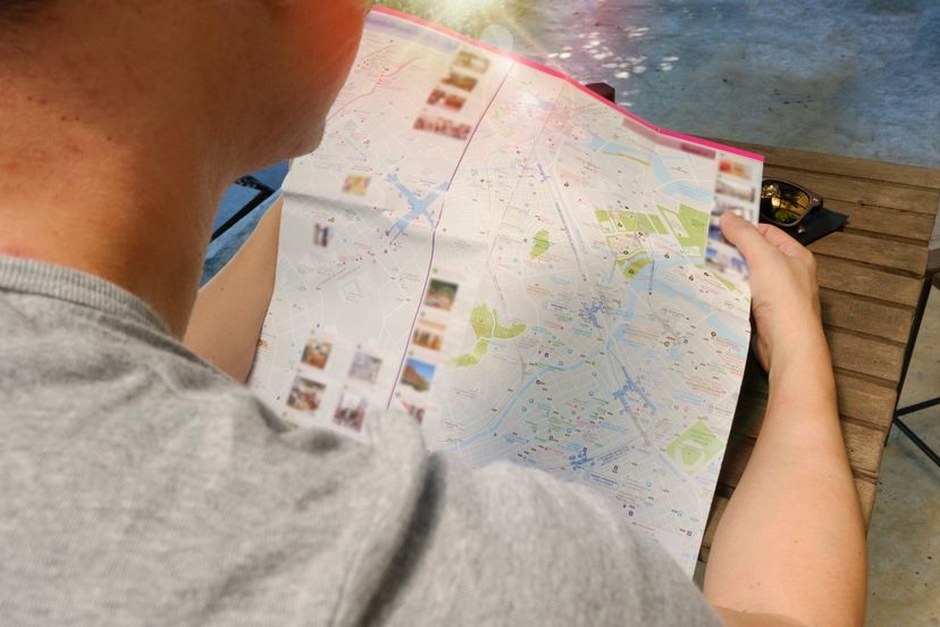
There is a particular kind of freedom in walking through a city without trying to see everything. A slow city walk has no checklist, no race between landmarks, and no pressure to turn every corner into a photograph. It begins with a direction rather than an itinerary. A folded paper map can make the experience even better because it shows the shape of the place without constantly telling you what to do next.
Choose one neighborhood, one market, one riverside path, or one café as a loose destination. Then allow the route between here and there to matter as much as the endpoint. The ordinary details—a worn shop sign, a courtyard glimpsed through an open gate, laundry above a narrow lane—are often what stay in memory.
Start with one loose destination
A walk becomes more relaxed when it has a little structure but not too much. Pick a point that is easy to recognize on a map and give yourself more time than the direct route requires. The goal is not to get there efficiently. It is simply to have a thread to follow when the streets begin to feel unfamiliar.
Paper maps are useful here because they show adjacent streets at a glance. Instead of following a blue line turn by turn, you can notice that a side road bends toward a park, that two blocks form a small square, or that a canal runs parallel to your route. Those small observations invite detours without making you feel lost in the anxious sense of the word.
Notice what the map leaves out
Maps are excellent at showing streets and poor at showing atmosphere. They cannot tell you which corner smells like fresh bread, where the afternoon light hits old brick, or which tiny garden has a bench hidden behind tall grasses. Once you stop treating the map as an instruction sheet, it becomes a background reference while the city itself takes over.
Look up more often than you look down. Architectural details are easier to see at walking speed: carved lintels, repaired masonry, mismatched balconies, old lettering beneath newer paint. Even a familiar residential street can reveal a surprising amount of visual history when you are not hurrying through it.
Make room for a pause
A good slow walk usually contains at least one deliberate stop. It might be a small café, a public bench, a bookshop, or a patch of shade in a square. Sitting still for ten minutes changes the rhythm of the outing. You start noticing who uses the street, where people pause, and how the neighborhood sounds when you are not moving through it.
This is also a natural moment to mark the map with a pencil or make a few notes. Not every observation needs to become a travel diary. A street name, a bakery worth revisiting, or a quick sketch of the route is enough to give the afternoon a shape you can return to later.
Let one turn be genuinely unplanned
Most wandering still contains a surprising amount of decision-making. To loosen that habit, try allowing one turn to be chosen only because the street looks inviting. Perhaps it is quieter, greener, steeper, or lined with buildings from a different period. Follow it until curiosity fades, then use the map to reconnect with your rough direction.
That small degree of uncertainty is often the most memorable part of the walk. It gives you the feeling of discovery without requiring a distant trip. The city has not changed, but your relationship to it has: for an hour or two, familiar urban space becomes something to read rather than simply cross.
Bring the walk home
Afterward, resist the urge to turn the experience into a complete record. Save one or two traces: the folded map, a receipt from the café, a short note, or a handful of photographs. The point is not documentation for its own sake. It is to preserve the mood of moving slowly enough to notice.
Slow city walks work well precisely because they are modest. They require little preparation and no special season. A free afternoon, comfortable shoes, and a neighborhood with a few streets you do not know are enough. The reward is a renewed sense that ordinary places still contain edges, details, and stories waiting to be noticed.